February 11th is the International Day of Women and Girls in Science! To celebrate, we asked women at CHRIM some questions about how they became interested in science and how we can inspire the next generation of #WomenInSTEM.
Over the coming weeks, we’ll be sharing a series of blog posts featuring different women at CHRIM with careers in science. This week, read about Dr. Ayesha Saleem.
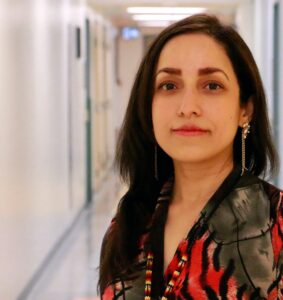
Dr. Ayesha Saleem is a principal investigator at CHRIM, working to decipher the effects of extracellular vesicles on metabolism and cellular outcomes during conditions of health and disease. Read below to hear her thoughts on a career in science, the importance of diversity, and how to empower more women and girls to pursue careers in science.
What made you choose a career in STEM?
When I was young, my mom told me that I should grow up and become a scientist and I had absolutely no idea what a scientist was. I remember drawing a picture of myself as an adult, holding flasks with different coloured liquids and a lab coat, which is pretty much how everyone thinks of scientists in the media, and apparently, it was a self-fulfilling prophecy, so here I am.
Why is diversity important in the field of science?
Two heads are better than one [and more heads are better than two], so if we bring together people who think about the same problem in different ways because they undertook different paths in life, we’re going to increase our chances of solving that problem. Diversity is good for taking on many different issues, problems and questions we have as a society, and certainly important in the field of science as well.
What project or achievement are you particularly proud of in your scientific career?
All of it. I think all scientific studies are a labour of love, of so much hard work, and so much effort. Sometimes you get this perfect story building up and sometimes you don’t. That doesn’t mean it’s not important. I’m proud every time my team and I work together, we work hard and diligently, and the answer we find is the answer we find. I’m proud of all the research stories we are producing in our lab. There is so much more to come, and everything we’ve done so far is fantastic.
How can we inspire and empower more young girls to pursue careers in science?
I think we have to get them in the lab, or at least tell them about being in a research lab. I’m going to refer back to my own story of my mom telling me about being a scientist. Tell girls that this is a viable career option. Show them how cool it is to discover things that no one else knows about. If we get them in the labs, and if we are lucky enough to get those who are interested and motivated, they’re going to have a beautiful career. At the end of the day, that’s what takes you the furthest in life – no matter what you do, you have to be motivated and passionate and interested. The first step is being aware of it. So, getting girls in STEM as early as possible is key. Presenting them with opportunities to be in the lab, to be doing research, and present this as a fulfilling and amazing career.
What advice would you give to young girls aspiring to enter the world of science?
It sounds cliché but be passionate about it. That’s my advice for anyone entering any field. If you’re not passionate about it, it doesn’t take you very far, or you won’t be very happy at the end of the day. Sometimes, that’s OK, you enter the space, and you find out that it’s not for you, that’s totally fine. When you enter science, academia, research, or whichever career path you choose, put your heart and mind into it and see if it fulfills and rewards you. If it does, then you know that’s the thing for you. If it doesn’t, that also helps you decide. Put your best foot forward, put all your heart and soul into what you do, and see if it works out.
Is there a woman in STEM who inspires you?
Marie Curie, Rosalind Franklin, and Hedy Lamarr, just off the top of my head right now. We stand on the shoulders of giants. There have been so many women trailblazers in research and science, I should probably Google all the names and list them. I would also say, right now, all of my fellow women scientists and colleagues who are working hard, who are handling multiple things on their plates, and striving for success for their teams. My mentors, who are in the field whether as scientists, or clinicians or both, who are working dedicatedly, whether or not they’re getting rewarded or recognized for their efforts. All of them inspire me.